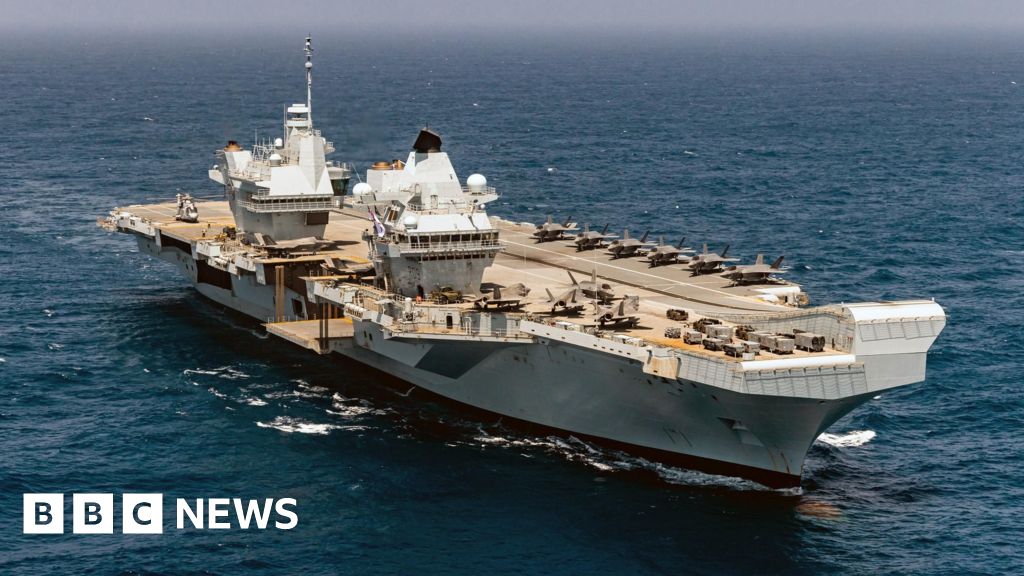
Royal Navy Readiness: Both Queen Elizabeth Class Carriers Deployed, Bolstering British Aircraft Carriers' Global Reach
In a significant demonstration of naval power and enhanced readiness, both of the United Kingdom's cutting-edge Queen Elizabeth Class aircraft carriers, HMS Queen Elizabeth and HMS Prince of Wales, are currently at sea. This dual deployment marks a pivotal moment for the Royal Navy, underscoring its commitment to operational capability, sustained training, and the projection of global influence. For enthusiasts and analysts of British Aircraft Carriers, this concurrent deployment is a clear signal of the nation's resolve to maintain a robust presence on the world stage.
The sight of these two colossal warships simultaneously engaged in exercises and defence engagements in waters around the UK speaks volumes about the Royal Navy's recovery and the strategic importance of its carrier strike capability. It represents the culmination of years of design, development, and significant investment in what are arguably the most advanced vessels ever to fly the White Ensign.
The Dual Deployment: A New Chapter in Naval Readiness
The current operational tempo for both carriers follows a period of intense activity and, for HMS Queen Elizabeth, critical maintenance. Having departed Portsmouth, HMS Prince of Wales recently joined her sister ship, HMS Queen Elizabeth, at sea. This reunion wasn't without its challenges and highlights the inherent complexities of operating such sophisticated assets.
HMS Queen Elizabeth herself returned to Portsmouth on November 1st, 2024, after a demanding 10-day training period. Demonstrating an impressive turnaround capability, the carrier set sail again just three days later, on November 4th, for further operational training and defence engagement. This swift redeployment is particularly notable given the ship's recent history.
Earlier this year, HMS Queen Elizabeth underwent critical repairs at Rosyth, addressing a technical issue with her starboard propeller shaft coupling that had unfortunately led to her withdrawal from the significant NATO exercise Steadfast Defender. During this crucial repair phase, HMS Prince of Wales stepped up admirably, assuming operational responsibilities and demonstrating the vital redundancy offered by having two such powerful vessels. Now, with HMS Prince of Wales also having recently returned to sea for training and operational exercises following Exercise Strike Warrior, the Royal Navy boasts unparalleled flexibility and depth in its maritime capabilities.
Currently, HMS Queen Elizabeth is focused on routine operational training and defence engagement, with a planned visit to a European city on the horizon before her expected return before Christmas. This period of intense activity ensures that the crews remain at the peak of their readiness, honing skills essential for complex maritime operations and interoperability with allied forces.
Understanding the Queen Elizabeth Class: Pillars of Power
The Queen Elizabeth Class aircraft carriers are not merely ships; they are mobile airbases and strategic command centres, representing the pinnacle of Queen Elizabeth Class: Royal Navy's Largest & Most Advanced Carriers. They are designed to serve as the primary components of the UK’s Carrier Strike Group, capable of projecting air and naval power anywhere in the world.
Commissioned in December 2017, HMS Queen Elizabeth paved the way, followed by HMS Prince of Wales in December 2019. These magnificent vessels were built by the Aircraft Carrier Alliance at a total cost of approximately £7.6 billion, replacing the earlier, smaller Invincible-class carriers. The scale of their ambition is reflected in their impressive specifications:
- Displacement: 65,000 tonnes
- Length: 284 metres
- Propulsion: An integrated electric propulsion system combining Rolls-Royce Marine Trent MT30 gas turbines with Wärtsilä diesel engines, delivering a staggering 158,800 horsepower.
- Speed: Capable of speeds exceeding 25 knots.
- Range: An impressive operational range of up to 10,000 nautical miles.
These features allow them to operate globally, supporting F-35B Lightning II stealth jets, Merlin helicopters, and various unmanned aerial systems. Their design emphasizes flexibility, allowing them to adapt to diverse mission profiles, from high-intensity combat operations to humanitarian aid and disaster relief.
The Strategic Imperative: Why Two British Aircraft Carriers Matter
The deployment of both Queen Elizabeth Class carriers simultaneously offers profound strategic advantages for the United Kingdom. It’s more than just a show of force; it’s a commitment to a robust and resilient defence posture.
- Enhanced Readiness and Redundancy: As demonstrated by HMS Prince of Wales stepping in during HMS Queen Elizabeth's repairs, having two carriers ensures that the UK can maintain a continuous carrier strike capability, even when one vessel is undergoing maintenance or refit. This redundancy is crucial for sustained global operations.
- Global Power Projection: Two carriers double the UK's capacity to project air power, conduct maritime security operations, and lead multinational task groups far from home shores. This capability is vital for protecting national interests, supporting allies, and contributing to international stability.
- Intensive Training and Doctrine Development: Operating both carriers concurrently provides unparalleled opportunities for the Royal Navy and Fleet Air Arm to refine tactics, techniques, and procedures. It allows for large-scale exercises that simulate real-world scenarios, fostering interoperability with NATO and other partner navies, and ensuring that the Carrier Strike Group concept is continuously evolved and perfected.
- Diplomatic Influence and Deterrence: The presence of a British Carrier Strike Group sends a powerful diplomatic message. Two groups, even if operating in different theatres or on different missions, amplify that message. They act as a deterrent to potential adversaries and reassure allies of the UK's commitment to collective security.
This commitment to state-of-the-art carrier aviation is deeply rooted in the history of British naval power. As detailed in comprehensive works like David Hobbs' "British Aircraft Carriers: Design, Development and Service Histories," the UK has a long legacy of pioneering and evolving carrier technology. The Queen Elizabeth Class represents the zenith of this tradition, blending historical insight with cutting-edge engineering to create vessels designed for the challenges of the 21st century. Their deployment today is a testament to this enduring legacy and the future ambitions of the Royal Navy.
Operational Insights: Maintaining the Edge
Operating and maintaining two such complex vessels simultaneously presents unique challenges and opportunities. From a practical standpoint, the coordination required for dual deployments is immense, involving thousands of personnel, vast logistical chains, and sophisticated command and control systems.
For the Royal Navy, this period offers valuable insights into:
- Crew Training and Development: Sustained periods at sea, especially alongside a sister ship, accelerate the training of sailors and aviators, building expertise across all ranks and specialisations.
- Logistical Prowess: The ability to support two major capital ships at sea simultaneously tests and refines the Royal Navy's logistical capabilities, ensuring that fuel, provisions, spare parts, and munitions can be delivered efficiently, even in complex environments.
- System Reliability and Performance: Continuous operation provides real-world data on the performance and reliability of the carriers' advanced systems, allowing for proactive maintenance planning and system upgrades.
The current deployments are not just about showing force; they are about rigorous, continuous self-improvement, ensuring that these British aircraft carriers remain at the forefront of global naval capabilities. The emphasis on operational training and defence engagement signifies a proactive approach to maintaining peace and security through a visible and capable naval presence.
Conclusion
The concurrent deployment of HMS Queen Elizabeth and HMS Prince of Wales is a landmark moment for the Royal Navy and a powerful affirmation of the United Kingdom's role as a leading maritime nation. These magnificent British aircraft carriers represent a significant investment in national security and global influence, embodying a legacy of naval innovation that stretches back through centuries. Their current activities, from routine training to defence engagement, highlight a renewed focus on readiness, operational flexibility, and the ability to project power when and where it's needed most. As both vessels continue their missions, they serve as potent symbols of British resolve and the enduring importance of a strong, modern navy on the global stage.